New patients are always welcome.
Call 503-286-5654

Children’s Airway & Sleep
Sometimes the first clue is simply noticing how your child breathes and sleeps.
Children do not always show sleep or breathing concerns in obvious ways. Our role is to listen to what parents are noticing, evaluate relevant dental and craniofacial signs, and help determine whether anything deserves a closer look.
• Snoring or noisy breathing
• Mouth breathing
• Restless sleep
• Grinding or clenching
• Difficulty waking
• Daytime fatigue or irritability
• Crowded teeth or narrow arches
No single sign diagnoses a sleep or airway disorder. Patterns and persistence are what deserve a closer look.
Healthy breathing and restorative sleep matter during growth and development. Persistent sleep-related breathing problems can also overlap with daytime attention, behavior, mood, and energy, one reason ongoing patterns deserve appropriate evaluation.
Depending on the child’s age and concerns, we may look at:
• Jaw and palate development
• Bite, crowding, and arch form
• Tongue posture and oral habits
• Mouth versus nasal breathing
• Tooth wear or grinding
• Sleep symptoms and parent observations
• Growth and facial development patterns
The goal is to understand the dental picture and identify findings that may affect growth, function, or the next step in care.
An evaluation does not mean every child needs treatment. The right next step may be observation, routine dental care, orthodontic guidance, myofunctional support, or evaluation by another healthcare professional.
Dentists do not diagnose pediatric obstructive sleep apnea. When symptoms suggest a possible sleep-related breathing disorder or another medical concern, we may coordinate with the child’s pediatrician, sleep physician, ENT, orthodontist, myofunctional therapist, or another appropriate provider.
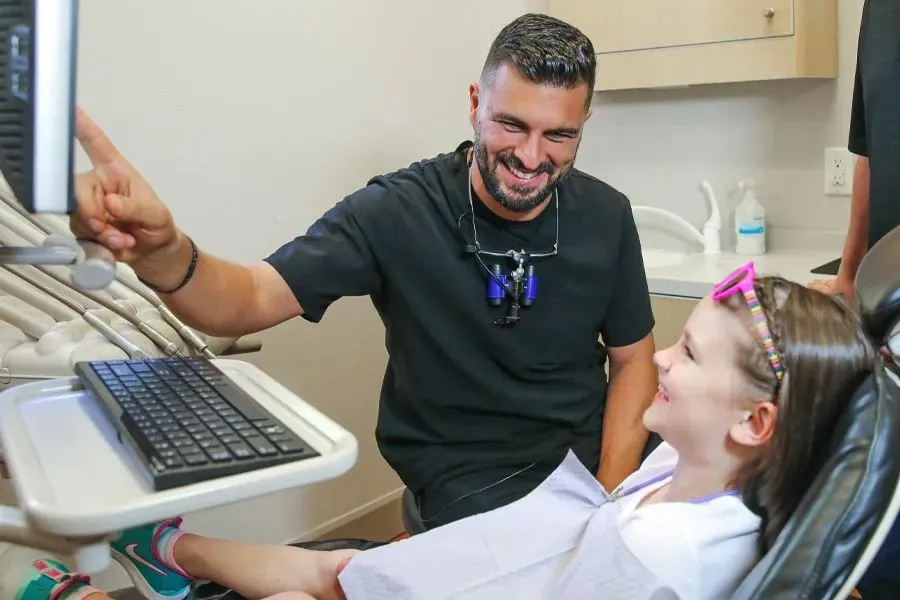
A Comfortable Place to Start
Real care, real conversations, and a setting where children can feel at ease.

Frequently Asked Questions

Clinical Review & Further Reading
Reviewed by Ziad Kaady, DMD
Diplomate, American Sleep and Breathing Academy · Advanced training in TMJ, orofacial pain & dental sleep medicine
Last reviewed: August 2026
Evidence & Education
Pediatric resources about obstructive sleep apnea, mouth breathing, sleep-related breathing problems, and growth.
Stanford Medicine Children's Health: Obstructive Sleep Apnea in Children
Patient information about pediatric obstructive sleep apnea, including mouth breathing, sleep disruption, and possible effects on growth and development.
Stanford Medicine Children's Health: Complex Obstructive Sleep Apnea Program
Information about multidisciplinary pediatric care when obstructive sleep apnea is persistent or related to craniofacial or other complex conditions.
These links are provided for patient education and do not replace individualized medical or dental diagnosis, treatment, or physician consultation when appropriate.

If something about your child’s breathing, sleep, or development concerns you, we can help you decide whether a closer evaluation is appropriate.